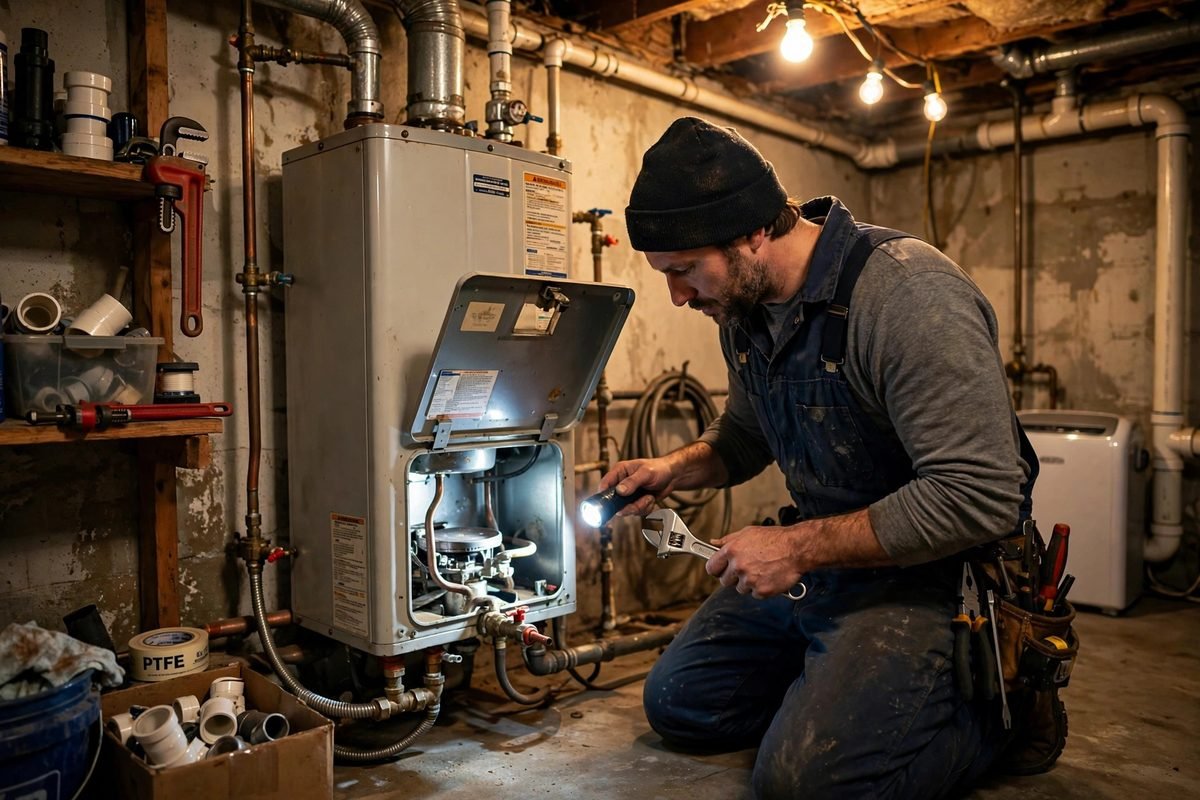
No hot water at all
On an electric heater, start at the breaker panel. A tripped breaker reset once is a reasonable check; a breaker that trips again immediately is the heater telling you an element has shorted, and repeated resets are not a fix. If the breaker is fine, the likely culprits are a failed element or thermostat — both testable in minutes with the right tools.
On a gas heater, look through the sight glass for the pilot. If it is out and you are comfortable following the relight instructions printed on the unit, that is a fair homeowner step. A pilot that lights but will not stay lit points to a thermocouple or gas-control issue, which is technician territory.
Hot, but not enough
Running out of hot water faster than you used to is a capacity problem with three usual causes. Sediment accumulating in the tank displaces water and insulates the bottom, so the heater stores less and heats slower. A broken dip tube — the pipe that sends cold water to the bottom of the tank — mixes incoming cold water with the hot water at the top. And on electric units, a failed lower element leaves only the top of the tank hot.
The rumbling or popping sounds often heard from an aging tank belong to the same story: sediment trapping water at the bottom, which flashes to steam. It is the heater's way of asking for a flush, and on an older unit, a sign of accumulated wear.
Tankless heaters have their own list
A tankless unit that stops mid-shower or shows an error code is commonly fighting scale — mineral buildup on its heat exchanger restricts flow and overheats the unit, which shuts itself down for protection. Annual descaling is the maintenance these units are designed around, and skipped years are the top cause of the error codes we see.
Write down any error code before resetting the unit. The code names the system that complained, and it turns a vague service call into a targeted one.
When repair stops making sense
Age is the honest filter. Tank heaters typically serve 8 to 12 years; a major repair on a unit in its eleventh year, with rust at the base or rusty hot water, is often money spent delaying a replacement by months. A leaking tank body is not repairable at all — that decision makes itself.
A good service visit ends with the arithmetic laid out plainly: what failed, what the repair costs in effort and parts, the unit's age and overall condition, and what a replacement would involve. Then the choice is yours, made with real numbers instead of pressure.
Questions homeowners ask about this
Why is my hot water brown or rusty?
Rusty hot water (but clear cold water) points inside the heater: the tank's protective anode rod is spent and the tank itself is beginning to corrode. It is one of the clearest end-of-life signs a tank gives.
How hot should I set my water heater?
Around 120°F is the standard recommendation — hot enough for comfortable use and to discourage bacterial growth in the tank, cool enough to reduce scald risk and energy waste. Households with specific health concerns sometimes go higher with a mixing valve; ask us if that applies to you.