The signs, decoded
A drain that empties a sink in slow motion is telling you its diameter is shrinking. Gurgling means air is being pushed or pulled through water standing in the line — an early stage of the same problem. Smells come from the buildup itself: the grease and organic film coating the pipe is literally rotting in place.
The pattern matters as much as the symptom. One slow bathroom sink is a local clog, usually hair and soap. A kitchen sink that slows down every few months is a grease-coated line. Several fixtures acting up together — especially with the lowest drain in the house backing up — means the main line, and that is a different conversation.
What a cable cleaning does well
A motorized drain cable (what most people call a snake) bores through the blockage and restores flow. For a hair clog in a bathroom branch or a one-time kitchen blockage, it is the right, economical tool, and it handles most household calls. It is also the tool of first resort on a fully blocked main line, because restoring flow comes before everything else.
Its limitation is built into how it works: it opens a path through the clog rather than removing the material coating the pipe. On a line narrowed by grease or scale, the path it opens is smaller than the pipe — so the line clogs again sooner than it should.
When jetting earns its cost
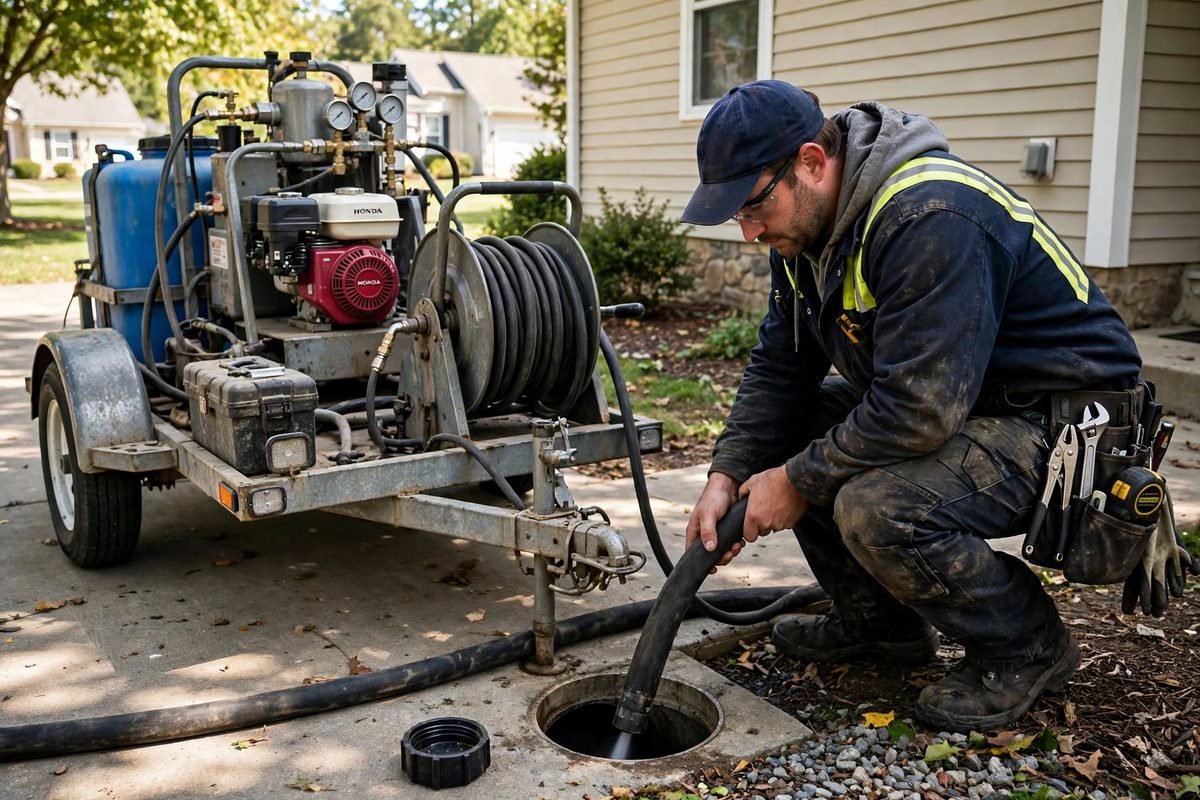
Hydro jetting uses high-pressure water to scour the full inner wall of the pipe, washing grease, scale and root fragments back out of the line. After jetting, the pipe is close to its original diameter, which is why it is the standard answer for recurring clogs, restaurant grease lines, and root-prone sewer laterals in older Westchester neighborhoods.
Jetting is not the first move on every job. On a pipe that may be cracked or collapsed — common in the oldest clay and cast-iron laterals around White Plains — pressure is the wrong tool until a camera shows the pipe can take it. A responsible sequence is: clear the blockage, inspect with a camera, then decide between jetting and repair with evidence in hand.
Making the result last
For kitchen lines, the habits matter: scrape and wipe grease into the trash instead of rinsing it down, and run cold water with the disposal so grease stays solid and moves through rather than coating the line warm. For root-prone sewer lines, periodic jetting on a schedule keeps roots cut back before they can dam the line.
If a plumber clears the same drain three times in a year, stop clearing it and start diagnosing it. The fourth visit should involve a camera.
Questions homeowners ask about this
Can I just use a store-bought drain cleaner?
We advise against chemical cleaners. They seldom open a serious clog, they can soften PVC joints and corrode old metal pipe, and they leave a line full of caustic water for the next person who opens it. A plunger handles simple clogs safely; beyond that, mechanical cleaning is the effective route.
How long does a jetting result last?
On a sound pipe, jetting restores near-full diameter, so results are measured in years rather than months for grease and scale. Roots will eventually regrow into a lateral — jetting on a one-to-two-year cycle keeps them managed, though a damaged joint that admits roots is ultimately a repair conversation.