The whole-house pattern
A single clogged sink is a sink problem. But when the kitchen sink, the tub and the washing machine all drain slowly in the same month, they are reporting on the one pipe they share. The lowest fixtures complain first — a basement tub or floor drain that backs up when laundry runs is the sewer line's clearest early warning, and the one most often dismissed as a fluke.
Gurgling is the sound version of the same report. Air displaced by water moving through a partially blocked main has to go somewhere; it bubbles up through toilet bowls and traps. If your toilet gurgles when the washer drains, the main line is already partially obstructed.
Signs outside the house
Walk your yard with the line's path in mind — roughly, from the house to the street. A strip of lawn that is lusher and greener than everything around it can mean the line is leaking water and fertilizer into the soil. A depression or soggy area along the route can mean soil is washing into a cracked pipe, which is how sinkholes over laterals start.
And use your nose. A persistent sewage smell outdoors, or indoors near floor drains, means gas is escaping somewhere it should not — through a break, a dry trap, or a venting problem — and it deserves a diagnosis rather than an air freshener.
Why Westchester lines fail
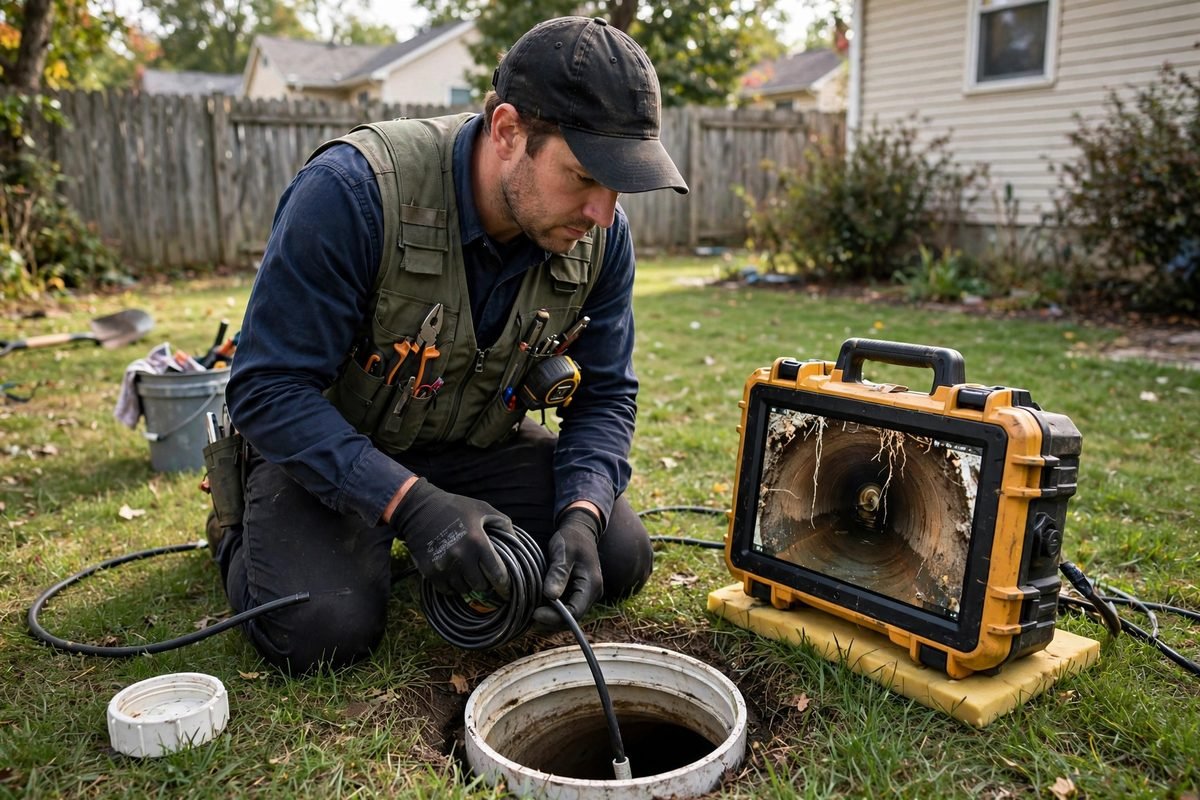
Much of White Plains and the surrounding towns was built with clay or cast-iron laterals that are now 70 to 100 years old. Clay joints open as soil shifts; cast iron scales and cracks; and the mature trees that line streets in Gedney Farms, Fisher Hill and Scarsdale send roots into any joint that offers moisture. Roots are the single most common finding on our camera in older neighborhoods.
None of this means every old line is doomed — plenty test fine. It means the condition of an old line is a fact you can obtain, not a fate you have to guess at.
The camera settles it
A sewer camera inspection takes under an hour in most cases and replaces speculation with footage: roots, cracks, offsets, bellies, buildup — located precisely and measured from the cleanout. If the line is sound, you have peace of mind and a record. If it is not, repair planning starts from evidence: which section, how deep, what it sits under.
If you are buying an older Westchester home, put the sewer line on your inspection list alongside the roof. It is the most expensive pipe you own and the only one you cannot see.
Questions homeowners ask about this
How often do sewer lines need attention?
There is no universal interval. Lines with known root intrusion often get cleaned or jetted every one to two years to stay ahead of regrowth. A line with no history of problems benefits from one camera inspection to establish a baseline — then you know what you own.
Can tree roots really crush a pipe?
Roots rarely crush a sound pipe; they exploit weakness. A hair root enters a loose joint or hairline crack, grows into a root mass that catches debris, and the pressure of growth can widen the opening over years. The fix depends on the joint's condition, which the camera shows.