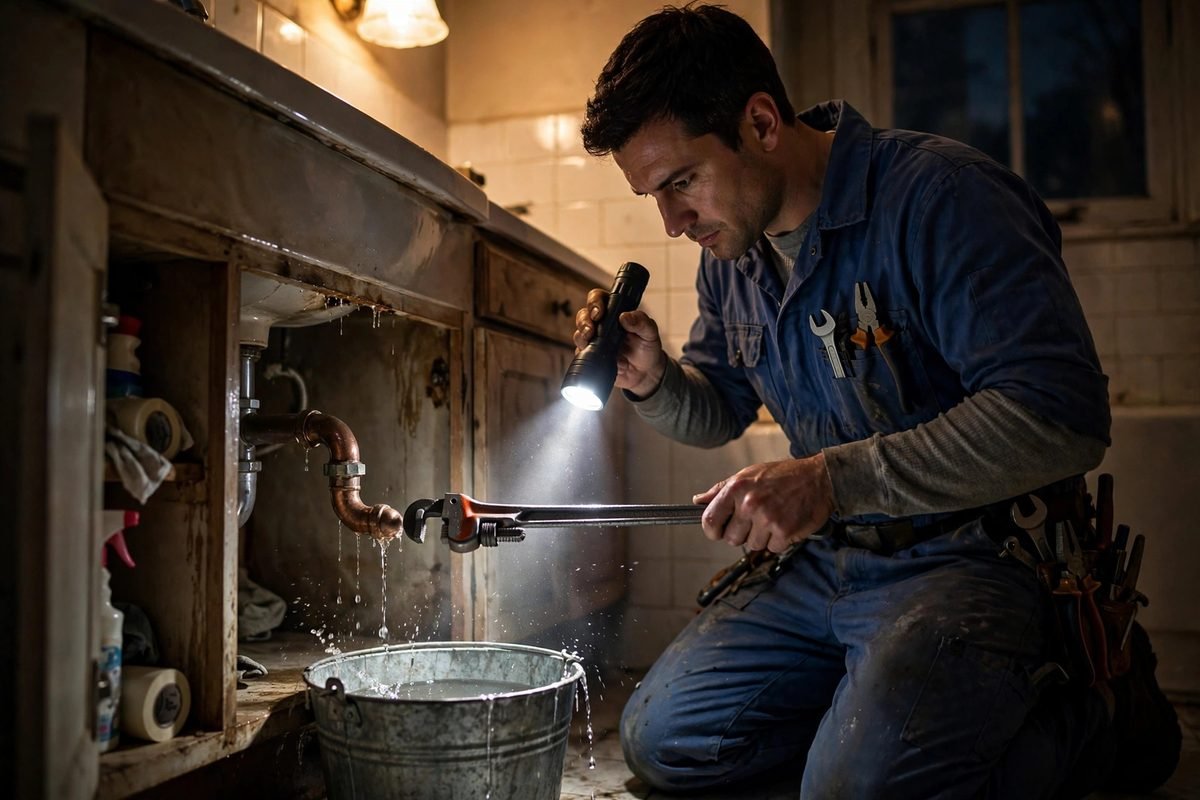
What usually causes it
- Frozen water expanding inside the pipe during a cold snap
- Corrosion thinning the pipe wall over decades
- High water pressure stressing joints and fittings
- A pipe damaged by a nail, screw or renovation work
- Age-related failure in galvanized or early copper lines
What you can safely check
- Close the main shutoff — usually near the water meter or where the main enters the basement
- Open a low faucet to drain pressure from the system once the main is off
- Turn off the water heater if the system has drained down
- Move belongings, and start drying — mold can begin within 24-48 hours
When to call a plumber
Call immediately — a burst pipe is a true emergency, and every minute of flow adds damage. Once the water is stopped and the section is replaced, ask about why it burst: if it froze, insulation and heat routing changes prevent a repeat; if it corroded, the neighboring pipe is usually in similar shape and worth inspecting while things are open.
The service that usually handles this: Emergency Plumbing. We handle burst pipe calls across White Plains and Westchester County — including White Plains, Scarsdale and Yonkers.
Questions about burst pipe
Where is my main water shutoff?
In most White Plains homes it is in the basement, on the wall facing the street, near the water meter — or where the main line enters the house. It is worth finding and testing yours on a calm day, not during a flood.
Can a burst pipe be repaired, or must it be replaced?
The damaged section is cut out and replaced — the repair is a replacement of that section. How much pipe to replace beyond the split depends on its condition: one freeze split in healthy copper is a small job; splitting corroded pipe is a sign to replace more.