What usually causes it
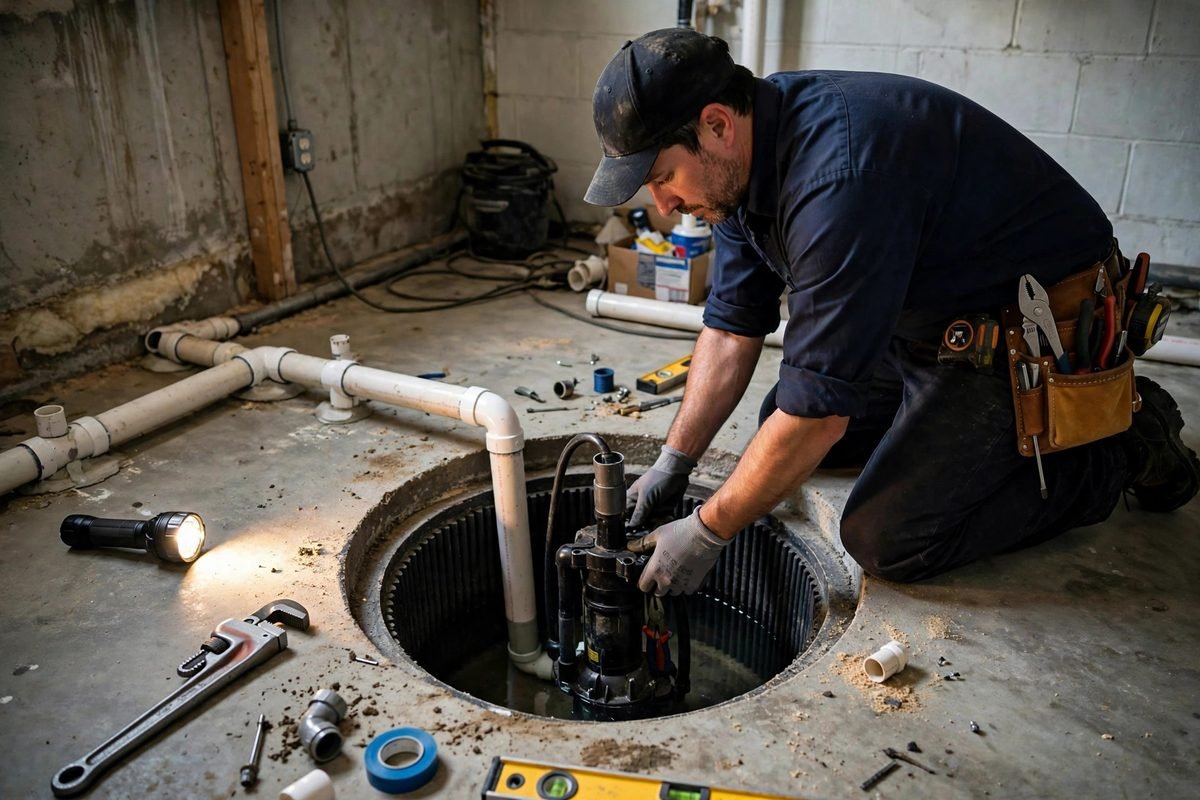
- Sump pump failure or a pump overwhelmed by inflow
- Power outage during a storm (no pump, no protection)
- Burst or leaking pipe, or a failed water heater
- Sewer or drain backup pushing water in from below
- Foundation seepage during heavy rain and snowmelt
What you can safely check
- If water is near electrical outlets or the panel, stay out and call for help first
- Shut off the main water valve and watch whether the water keeps rising
- Check whether the sump pump is running, humming, or silent — and whether its breaker tripped
- Look at what the water looks and smells like: clear groundwater, household water, or sewage each mean a different problem
When to call a plumber
Call us while the water is there if the source is plumbing — finding a leak is easier before everything dries. For sump problems, the fix ranges from a replacement pump to adding a battery backup so the next outage does not repeat the flood. Spring storms in Westchester make this the single most preventable disaster we see: test your pump before the season, not during it.
The service that usually handles this: Sump Pump Installation. We handle flooded basement calls across White Plains and Westchester County — including White Plains, Scarsdale and Yonkers.
Questions about flooded basement
My pump works, but the basement still flooded. How?
Either the inflow exceeded the pump's capacity, the discharge line was blocked or frozen, or the power was out during the worst of it. Each has a fix — capacity, discharge routing, or a battery backup.
How do I stop this from happening again?
A properly sized primary pump, a battery backup, a discharge line that carries water well away from the house, and a five-minute test each season. We can evaluate your setup and tell you honestly which of those you are missing.