What usually causes it
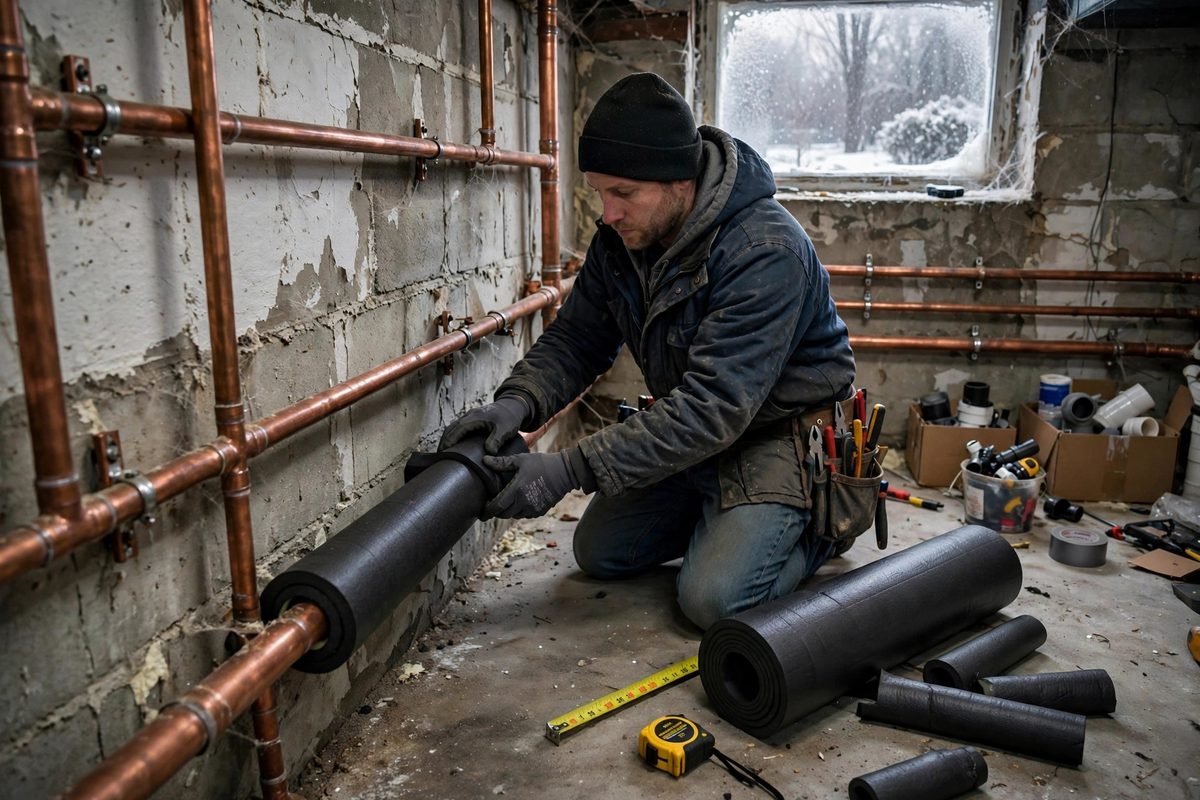
- Pipes in unheated basements, crawl spaces and garages
- Pipes in exterior walls with little insulation
- A cold snap following a mild stretch, catching pipes unprotected
- Outdoor faucets left connected to hoses over winter
- A heating failure or vacation thermostat set too low
What you can safely check
- Open the affected faucet — it relieves pressure and lets you see when flow returns
- Warm the pipe area with a space heater, heating pad or hair dryer, keeping heat moving and supervised
- Check nearby pipes too — freezes often come in groups along the same cold wall
- Know where your main shutoff is before thawing, in case a split reveals itself
When to call a plumber
Call if you cannot locate the frozen section, if a pipe has burst, if several lines are frozen (which can point to a freeze at the main), or if the same pipes freeze every winter — that pattern has a permanent fix involving insulation, rerouting, or heat cable, and it is far cheaper than one water-damage event. If you are heading out of town in winter, ask us about winterizing the plumbing properly.
The service that usually handles this: Pipe Repair. We handle frozen pipes calls across White Plains and Westchester County — including White Plains, Scarsdale and Yonkers.
Questions about frozen pipes
Will a frozen pipe always burst?
No — many freeze without splitting. The risk comes from pressure: ice expands and pressurizes the water trapped between the ice and a closed faucet. Leaving the faucet open while thawing gives that pressure somewhere to go.
How do I prevent frozen pipes?
Insulate exposed pipes, disconnect hoses and drain outdoor faucets in fall, keep the heat at a reasonable level when away, and on the coldest nights let a faucet on an exterior wall drip slightly and open cabinet doors under sinks so warm air reaches the pipes.