What usually causes it
- Mineral-clogged faucet aerators and showerheads
- Galvanized pipes corroding shut from the inside
- A pressure-reducing valve (PRV) failing or set too low
- A main shutoff or meter valve not fully open
- A hidden leak diverting water
- Municipal supply work or a neighborhood main issue
What you can safely check
- Test a plain outdoor spigot — strong there points to an indoor cause
- Unscrew a faucet aerator and rinse out the grit; you may fix that faucet in two minutes
- Ask a neighbor if their pressure dropped too — if so, it may be a city supply issue
- Check whether the drop was sudden (think leak or valve) or gradual over years (think pipe corrosion)
When to call a plumber
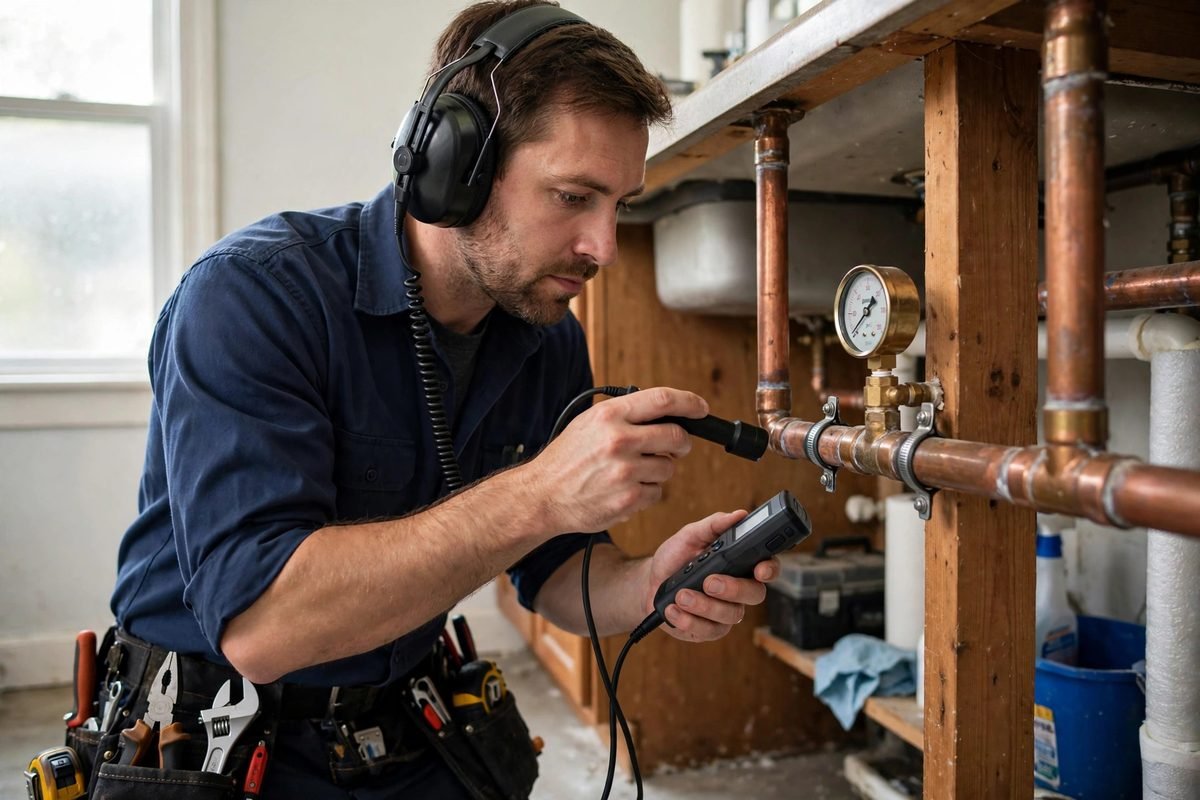
Call when the whole house is affected, when pressure dropped suddenly, or when a single bathroom is weak while others are fine — that pattern can mean a localized pipe or valve failure. A pressure test at the hose bibb takes a minute and tells us whether the house is getting proper pressure at the meter, which narrows the search immediately.
The service that usually handles this: Pipe Repair. We handle low water pressure calls across White Plains and Westchester County — including White Plains, Scarsdale and Yonkers.
Questions about low water pressure
What should home water pressure be?
Most homes sit comfortably between 45 and 65 psi. Below 40 feels weak; above 80 is too high and quietly damages fixtures, hoses and appliance valves. Both directions are worth correcting.
Can low pressure mean I have a leak?
It can, especially if the drop was sudden and the water bill rose at the same time. A meter test — watching for movement with all fixtures off — is the quickest check.