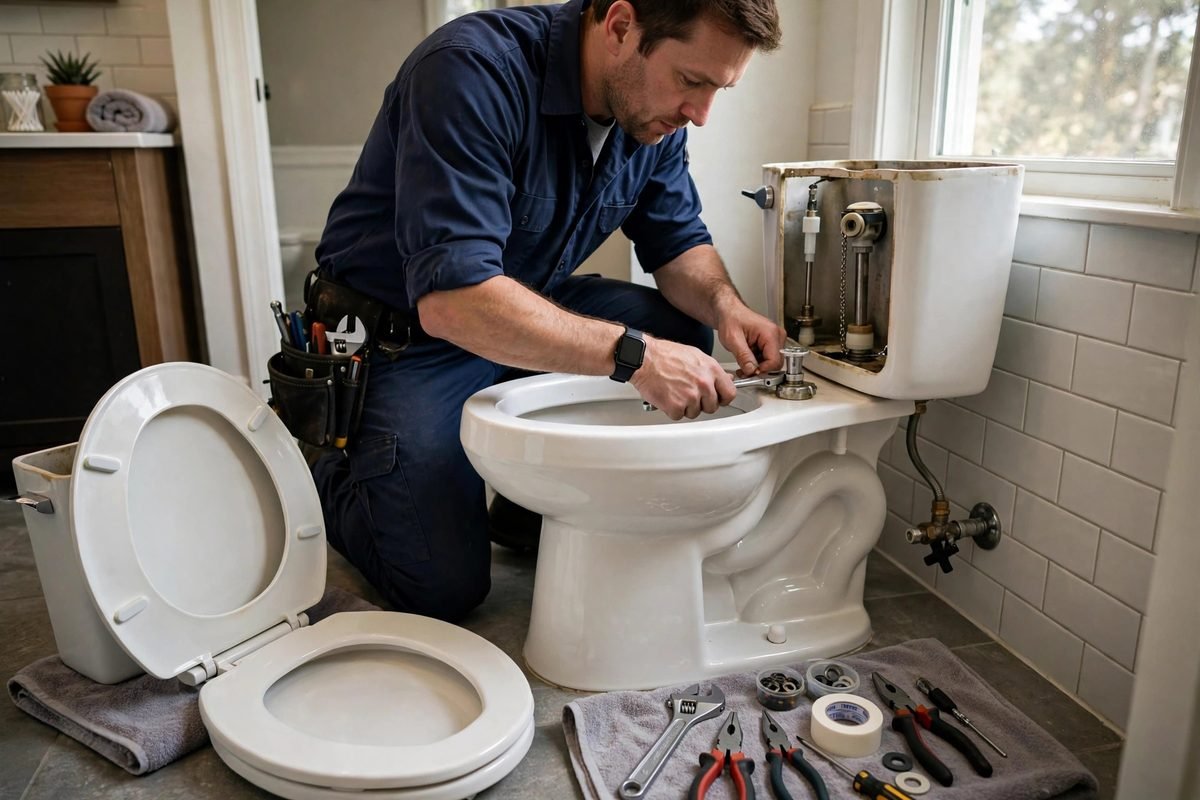
What usually causes it
- Worn or warped flapper letting tank water seep into the bowl
- Fill valve that no longer shuts off completely
- Water level adjusted too high, spilling into the overflow tube
- A chain that is tangled or too short, holding the flapper open
- Sediment or debris in the valve (common after water main work nearby)
What you can safely check
- Lift the tank lid and look: if water is flowing into the overflow tube, the level is too high or the valve is not shutting off
- Put a few drops of food coloring in the tank, wait 15 minutes without flushing — color in the bowl means the flapper is leaking
- Jiggle the handle: if the running stops, the chain or flapper alignment is the issue
When to call a plumber
Call if the simple checks do not identify it, if the toilet also rocks or leaks at the base (that is a wax ring problem, and it damages the floor), or if you would simply rather have it fixed in one visit with the right parts. A running toilet is a small job — it just should not wait months.
The service that usually handles this: Bathroom Plumbing. We handle running toilet calls across White Plains and Westchester County — including White Plains, Scarsdale and Yonkers.
Questions about running toilet
How much water does a running toilet waste?
A mildly leaking flapper can waste 20-50 gallons a day; a badly running toilet can waste several hundred. It is one of the most common causes of a mysteriously high water bill.
Why does my toilet flush by itself occasionally?
That ghost flushing is the tank slowly leaking through the flapper until the level drops enough to trigger the fill valve. It is the same flapper problem, caught early.